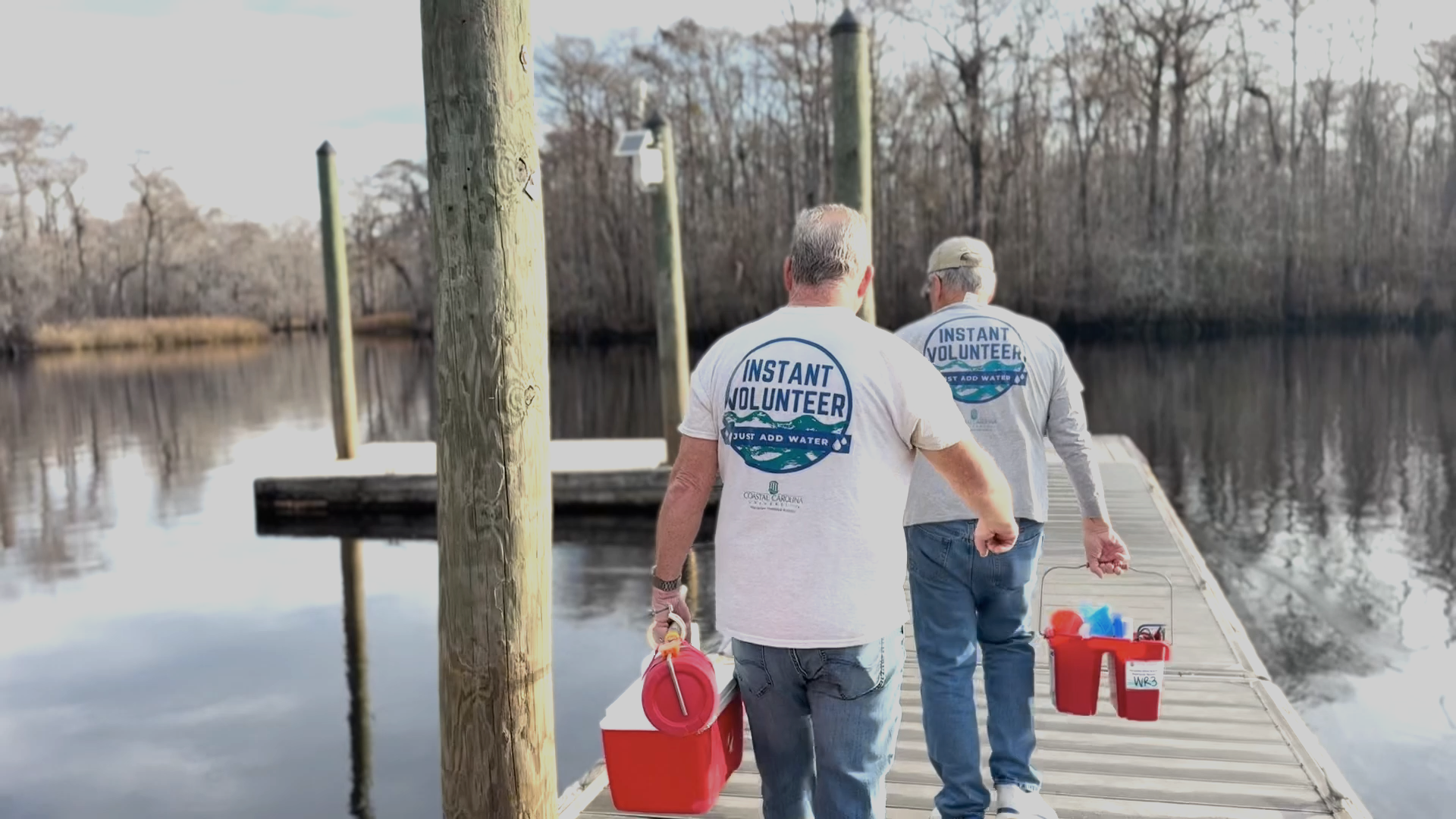

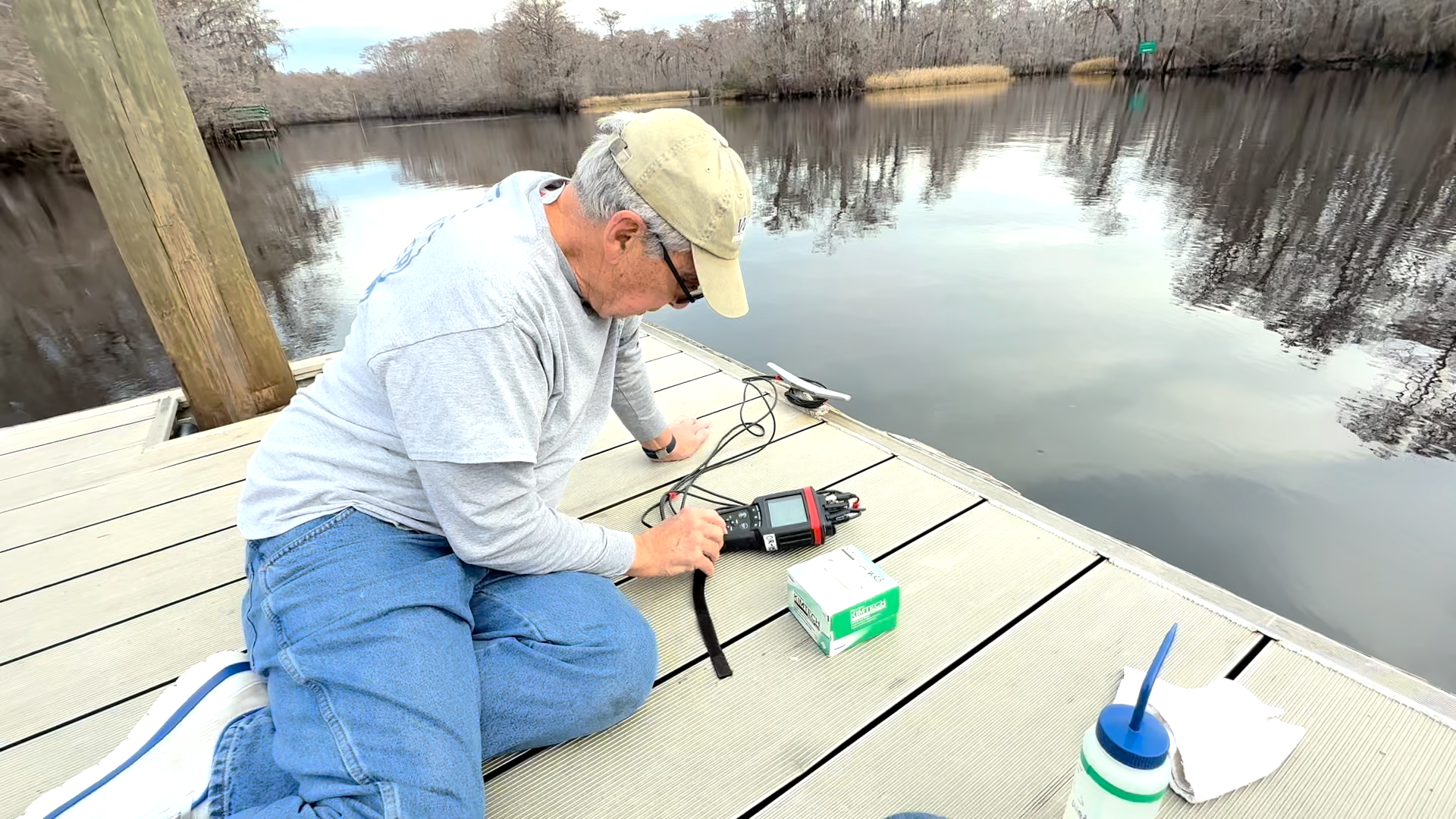
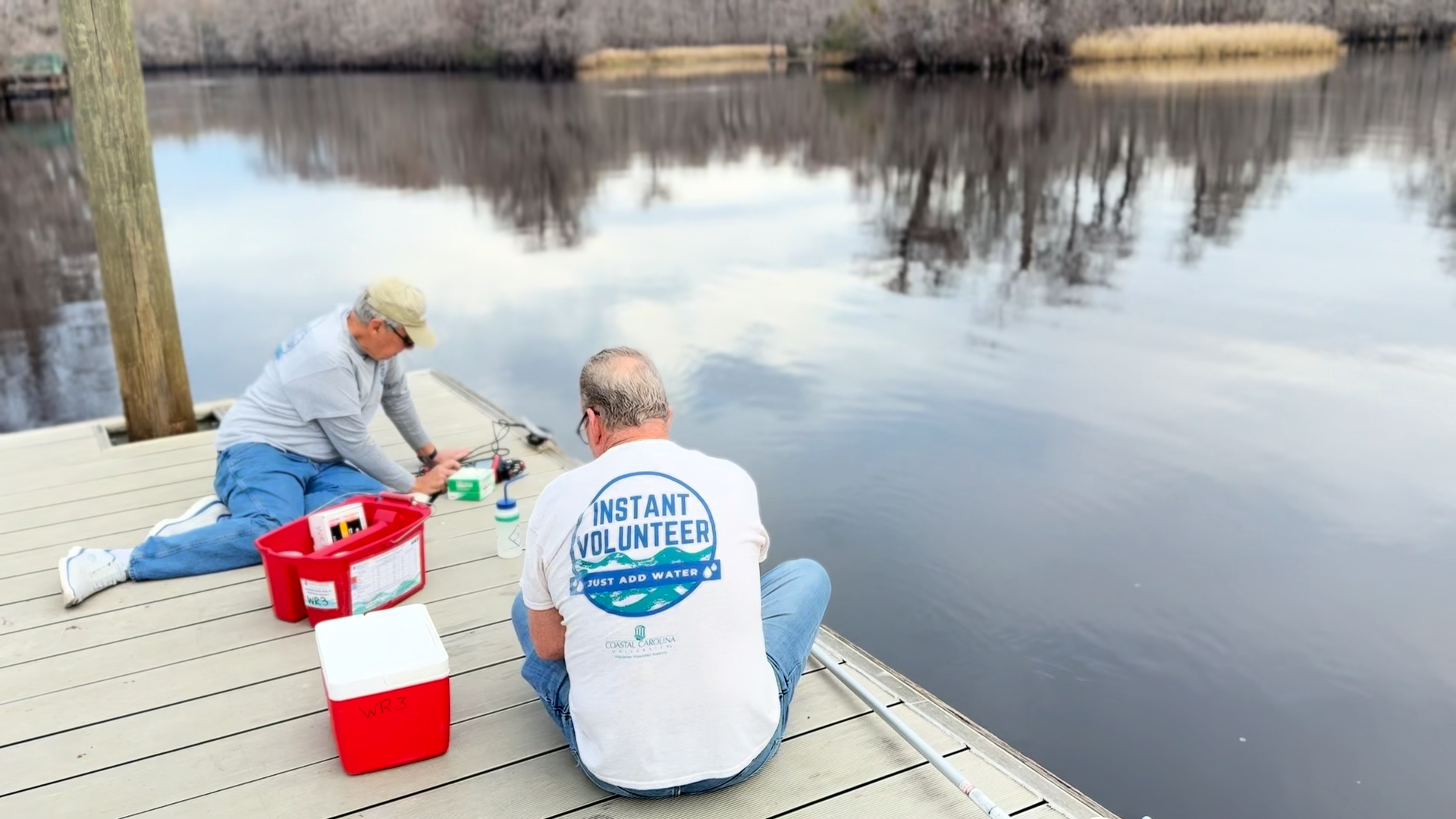
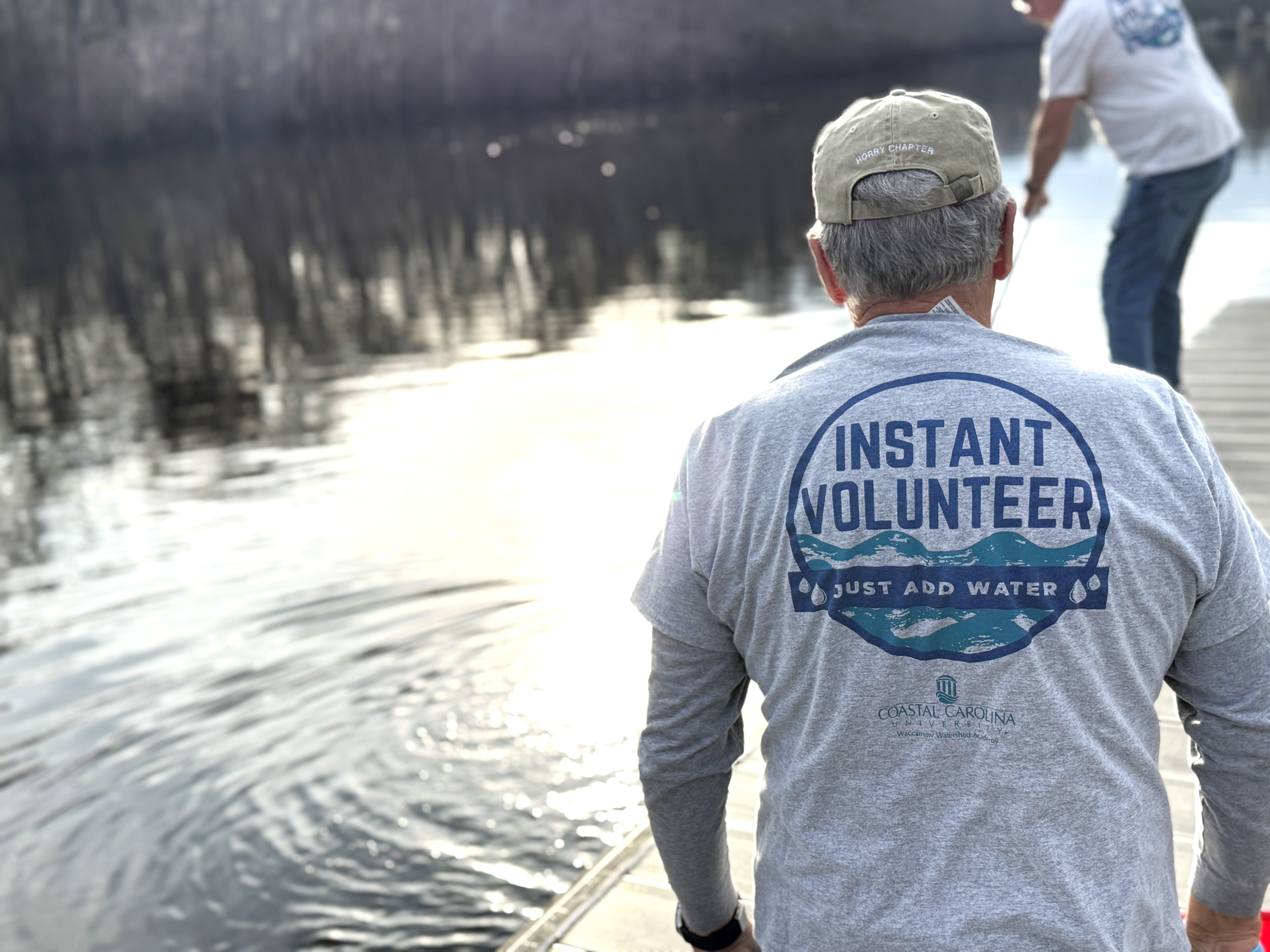
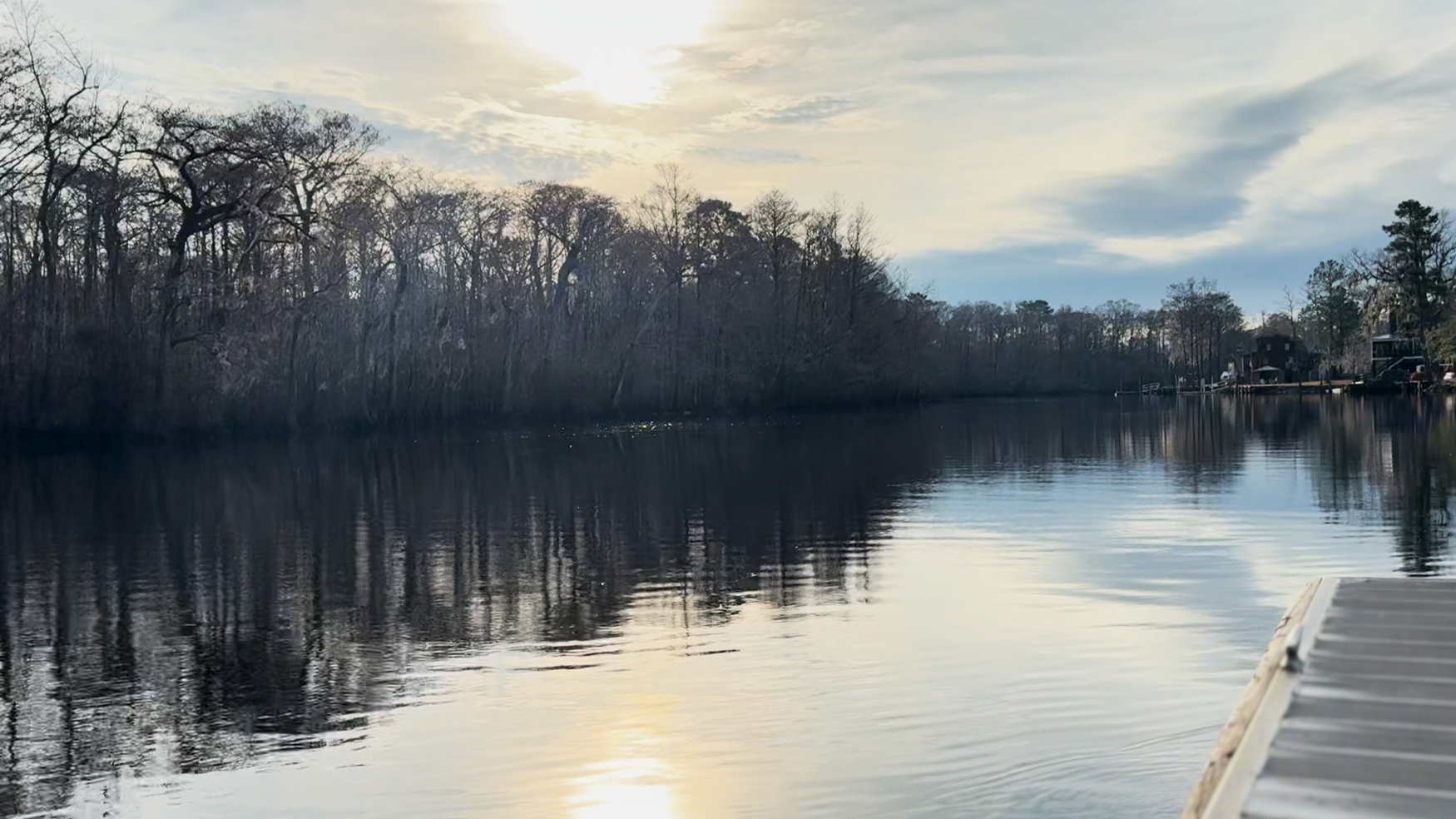
Friends Glenn Anderson and Paul Nussbickel have a standing appointment on the Waccamaw River. Their regular visits involve more than just leisurely activity, though. They diligently collect water samples for the Waccamaw Watershed Academy’s (WWA) Volunteer Water Quality Monitoring Program, a collaborative effort between local counties, municipalities and Coastal Carolina University (CCU).
The program was created in 2006 to keep an eye on the health of surface water in both Horry and Georgetown counties. It’s a collaborative effort that has grown to include four monitoring programs, three of which Horry County Stormwater invests annually, along with additional funding provided by Georgetown County, the City of Conway, and the townships of Briarcliffe Acres and Surfside Beach.
“It monitors water quality conditions across the county's watersheds,” Brent Carey, watershed planner for Horry County Stormwater, said. “The program provides long-term, science-based data that supports regulatory compliance and helps protect public health and natural resources.”
The program’s volunteers visit assigned monitoring sites twice each month. Sampling occurs at various locations along the Waccamaw River, the Murrells Inlet watershed, the Briarcliffe Acres Swash, and alongside two lakes within Briarcliffe Acres. A total of 14 of these sites fall within the unincorporated areas of Horry County.
While on-site, samples are collected to screen for a range of conditions, including pH levels, dissolved oxygen, conductivity and bacteria.
“Our volunteers are collecting basic water quality parameters, to help the county detect pollution. That data that they collect is shared with the experts at CCU. We analyze it and we share that information with Horry County Stormwater,” Victoria Green, who manages the Volunteer Monitoring Program at CCU, explained.
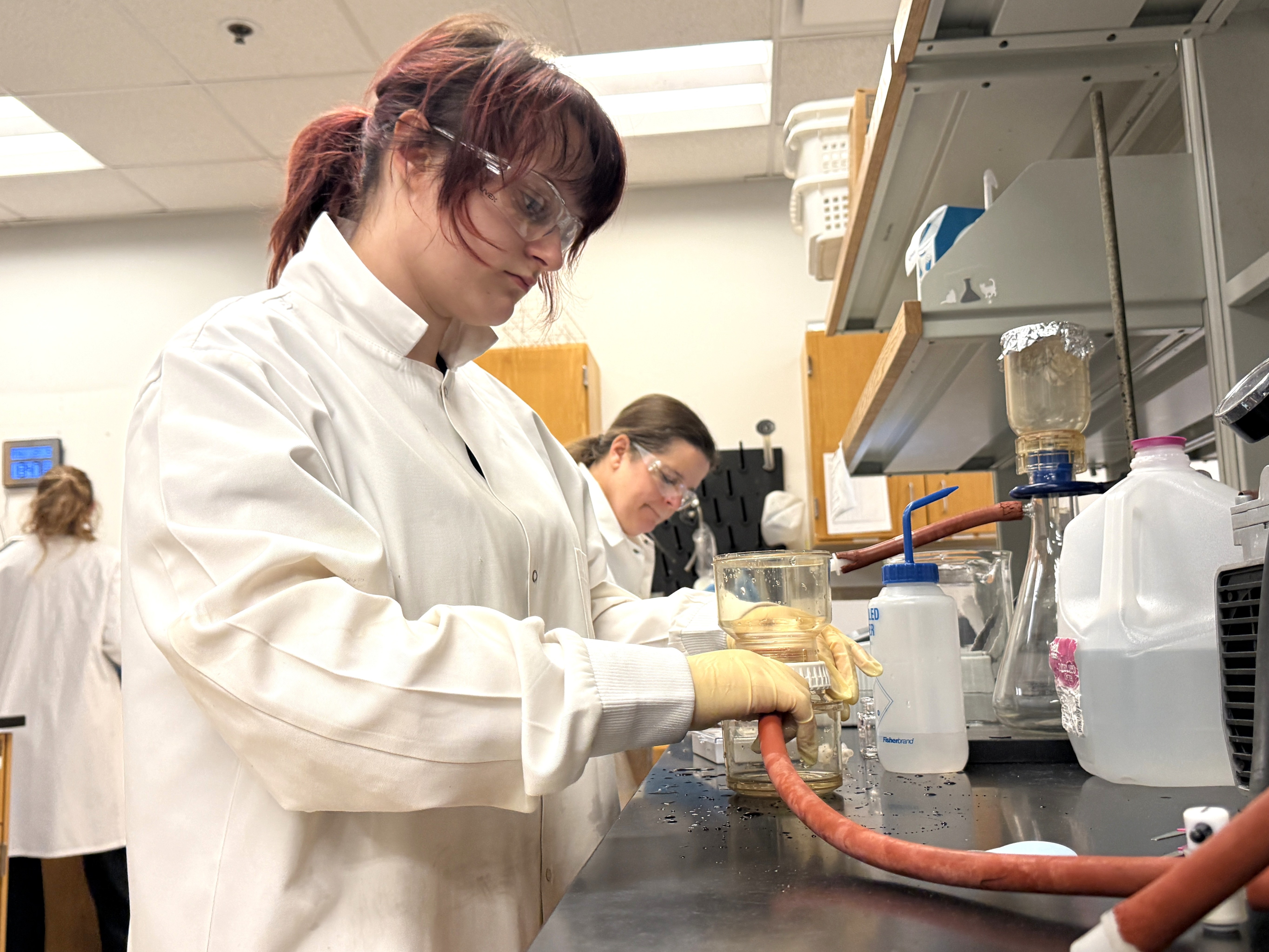
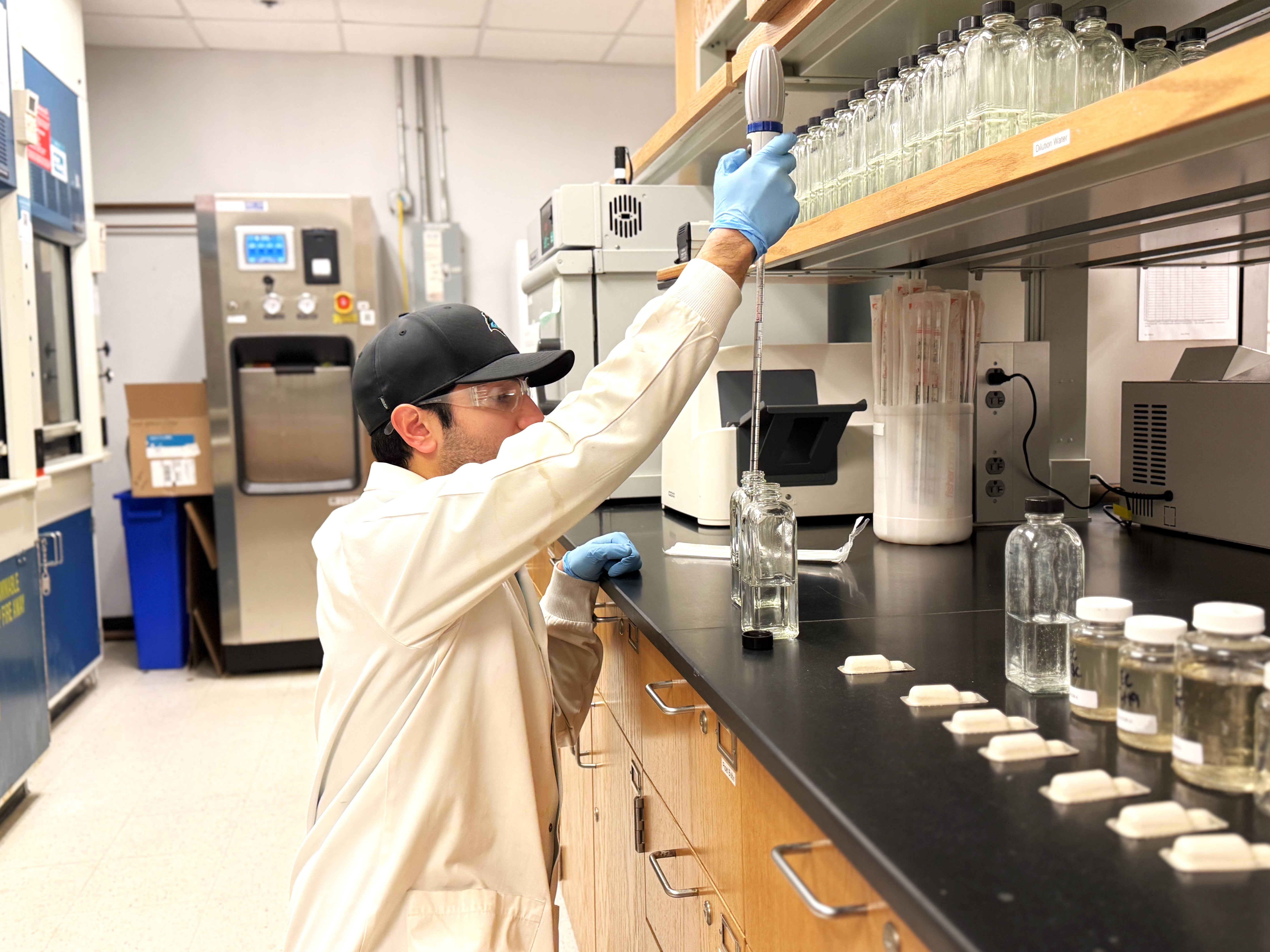
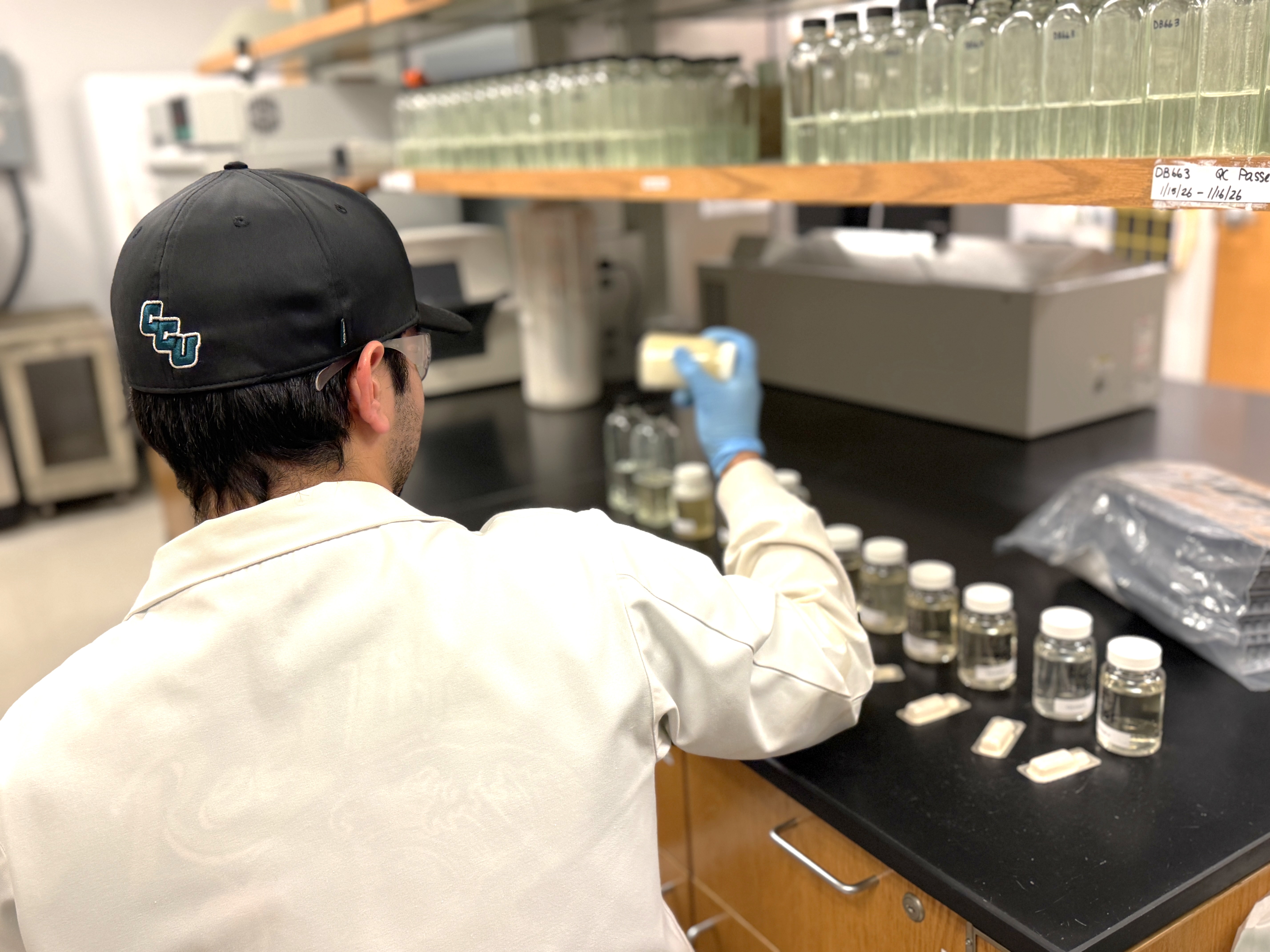
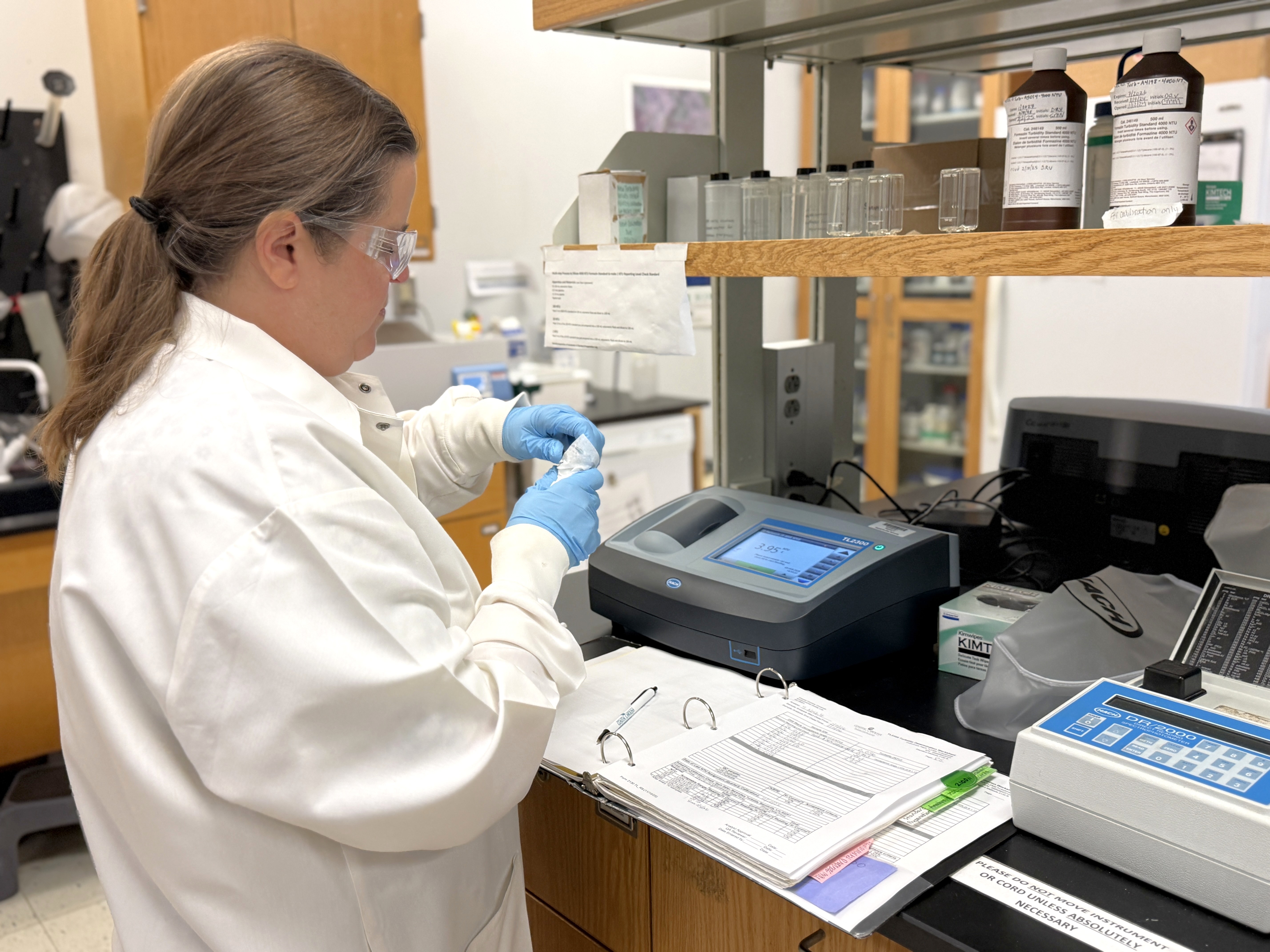
Inside the lab on CCU’s campus, staff scientists review the data from the field to check for potential errors and compare it to historical data from each site. They also monitor for concerning issues that may need to be brought to the attention of Horry County Stormwater.
“This information helps guide proactive management and targets investigation and restoration efforts,” Carey said.
One example of a program generated by this science-based data is Horry County’s Manufactured Wire Reef (MWR) in Murrells Inlet. Through water quality monitoring, pollutants were detected, prompting Horry County Stormwater to develop a nature-based solution.
“When we do identify water quality issues, we can also work on long-term education and outreach strategies. So, these can be things like oyster restoration and recycling,” Green said. “It can be reducing nutrients through best management practices like, rain gardens. It can reduce fecal contamination like pet waste campaigns. So, we collaborate with other entities to address the root causes of water quality issues as well.”
The program also functions as an educational resource for the community. Through comprehensive training of the protocols approved by the South Carolina Department of Environmental Services (SC DES), program volunteers also develop a greater understanding of the importance of preserving natural resources.
“The volunteers allow us to monitor far more areas, than we’d be able to cover as either staff at CCU or staff at Horry County. Additionally, the volunteers have insight into and connection to their sites because they are there, twice a month, year-round. They know what to expect,” Green explained.
For volunteers Anderson and Nussbickel, the program is more than an act of community service, it’s another meaningful way to spend time outdoors while giving back to a place they value.
“Being part of a team monitoring the health of the river, and the knowledge I have gained is immeasurable,” Nussbickel noted. “As an avid outdoor enthusiast, I regularly use the river for fishing and kayaking.”
After seeing firsthand the impact of the program, Nussbickel encouraged Anderson to get involved as well.
“I love the peace and serenity of being on the river,” Anderson said. “It is great to see that our work matters and to review the collected data and its meaning.”
No background experience is required to become a volunteer. Those interested in joining the Volunteer Water Quality Monitoring Program can email the program’s managers at vmwq@coastal.edu. From there, staff will provide additional details to help you get started, set up a shadowing session, and prepare you for training.
“We're so appreciative of our volunteers who dedicate their time and energy to this program. We couldn't do it without them. And we're excited to share more of the water quality work that's done at CCU in collaboration with Horry County,” Green added.
All data collected through the Volunteer Water Quality Monitoring Program is made available to the public through the program’s website. The database allows users to view the historical data collected from all sampling sites.
When volunteers are not on the river, staff scientists from the Environmental Quality Laboratory (EQL) monitor nine locations along the Waccamaw and Pee Dee rivers. Sampling at four of these sites is funded by Horry County. The EQL is certified by the SC DES to perform critical water quality analyses, which are conducted by staff scientists and CCU graduate students from the Gupta College of Science.
At each location, samples are tested for basic water quality parameters like the volunteer program, but additional grab samples are collected for advanced analyses back at CCU. In-depth analyses help provide greater insights into the health of Horry County’s major rivers.
CCU’s newly formed Environmental Quality Collaborative (EQC), which includes the WWA and EQL, also provides data on Horry County’s coast. Instruments at Apache Pier relay data every 15 minutes to public dashboards with a public display in the pier shop. Live webcam feeds at Singleton Swash and White Point Swash also provide managers with Horry County’s Stormwater and Engineering Departments with instant views of the conditions on the beach. The EQC is always seeking out new opportunities with CCU faculty and community partners that help better us understand and manage our local water resources.
“Horry County is really grateful for the partnership we have with CCU and we hope that partnership continues to grow,” Carey said.
To learn more about the collaboration between Horry County and the EQC CLICK HERE.